
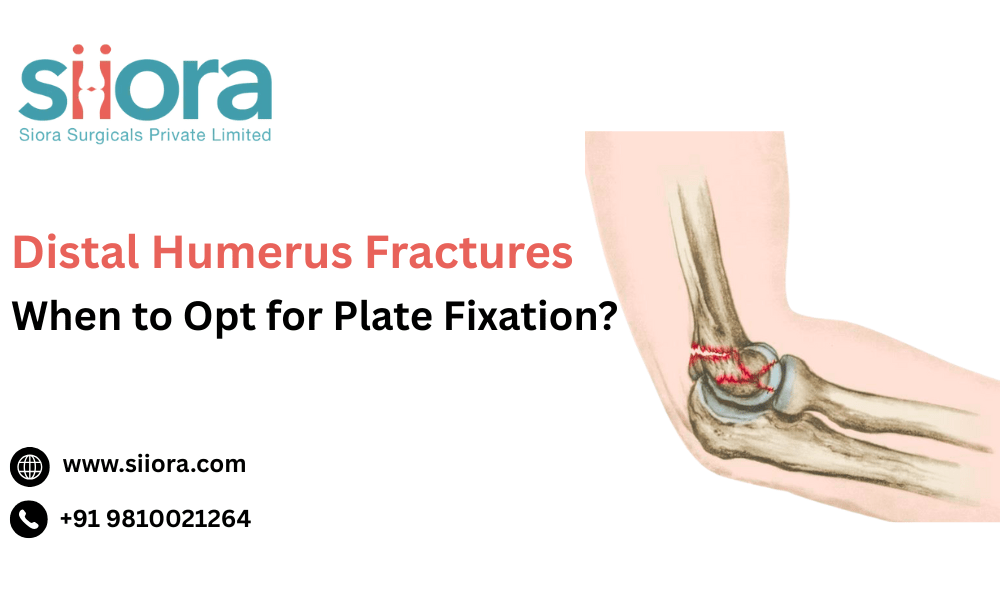
Fractures of the distal humerus, located at the lower end of the upper arm bone, are relatively uncommon but can be especially complex. These injuries are often the result of high-impact trauma in young individuals (such as from motor vehicle accidents) or low-energy falls in older adults with weakened bones. Regardless of the cause, these fractures can be painful, limit elbow motion, and significantly impact daily activities. One of the most effective treatment strategies, especially in complex or displaced fractures, is fixation with distal humerus plates. But how do you know when it’s the right choice?
Let’s explore what distal humerus fractures are, why some cases require surgical intervention, and when plate fixation becomes the preferred method.
Understanding the Nature of Distal Humerus Fractures
The distal humerus consists of two main columns, medial and lateral, along with the articular surface that forms the hinge of the elbow joint. Fractures in this region can vary widely, from simple breaks that involve just one column to highly comminuted (broken into multiple pieces) or intra-articular (joint-involving) fractures.
Some fractures can be treated conservatively with immobilization, but this usually applies only to non-displaced or minimally displaced fractures. The real challenge arises when the fracture is displaced, unstable, or extends into the joint. In such scenarios, relying on the bone to heal naturally without alignment can lead to long-term stiffness, deformity, or even permanent loss of elbow function.
The Role of Plate Fixation
Plate fixation is a type of open reduction and internal fixation (ORIF), where the bone fragments are surgically realigned and held in place with metal plates and screws. This technique is designed to restore anatomical alignment, provide stable fixation, and allow early motion of the elbow joint—an essential factor in achieving a good outcome.
The decision to use plate fixation depends on several factors:
- Type of Fracture: Comminuted fractures, intra-articular involvement, and bi-columnar fractures often require surgical fixation to ensure the joint surfaces are perfectly aligned. Non-surgical options in such cases could result in poor healing and function.
- Patient Age and Bone Quality: In younger patients with good bone quality, plate fixation offers predictable results. In older adults, where bone may be more brittle due to osteoporosis, plate fixation is still often preferred—but surgeons might use special locking plates that provide better grip in weak bone.
- Functional Demands: For patients who need to return to active lifestyles or jobs that involve arm movement—such as athletes, manual laborers, or even caregivers—plate fixation can help ensure a quicker and more reliable recovery.
- Surgeon’s Assessment: Sometimes, even if a fracture appears borderline on imaging, an experienced orthopedic surgeon may opt for plate fixation to prevent complications like non-union or malunion.
Recovery After Distal Humerus Plate Fixation
The post-surgery journey can be challenging but rewarding. Patients typically start gentle elbow movement within a few days to a week after surgery, depending on stability and pain. Physical therapy plays a crucial role in regaining strength and range of motion.
Complete healing can take several months, and while most patients regain functional use of their arm, some may experience mild stiffness. However, early intervention with the right orthopedic implants significantly reduces the risk of long-term disability.
Final Thoughts
Not all distal humerus fractures are created equal, and neither are their treatments. While non-operative care has its place, plate fixation remains the gold standard for complex, displaced, or joint-involving fractures. It restores stability, preserves elbow motion, and offers patients the best chance at returning to a normal, active life.
If you or someone you know suffers a distal humerus fracture, don’t hesitate to consult an orthopedic specialist. Getting the right treatment at the right time can make all the difference in your recovery and future elbow health.
 Siora Surgicals Pvt. Ltd.